Are Kitesurfing Beaches in Cyprus Sandy, Rocky or Shallow?

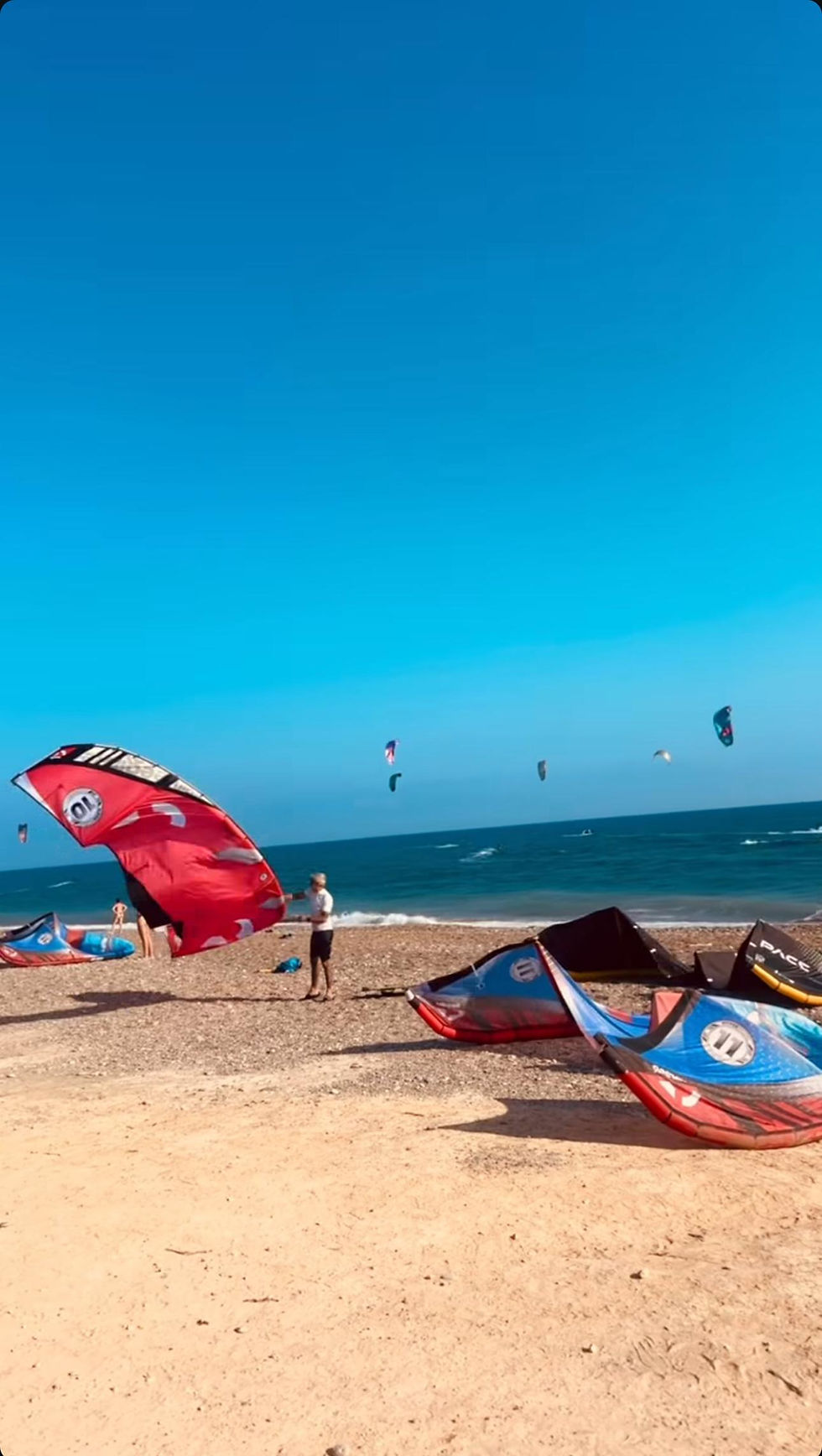
Cyprus kitesurfing beaches vary considerably. Some have sand or compacted sand, others include pebbles, stones or rocky sections, and water depth can change across a bay. A beach description found online should never replace an on-site check because seasonal storms and currents can alter the shoreline.
Sandy beaches
Sand can provide a comfortable setup area, but it does not automatically make a beach safe. Shells, glass, beach furniture, vegetation and vehicles may still be present. Fine sand can also enter valves and moving parts, so equipment should be handled carefully.
Keep lines organised and avoid laying them across paths used by swimmers or walkers.
Pebbles and stones
Some southern-coast beaches include pebbles or mixed sand and stones. Water shoes may help while carrying equipment, although they should fit securely for board use. Kites can be damaged if dragged across sharp stones.
Ask local riders about the safest launch section instead of choosing the smoothest-looking patch without considering wind direction.
Rocks and reefs
Visible or submerged rocks create hazards for beginners and equipment. Water depth and clarity can make them difficult to judge from shore. A location that is suitable at one water level or wind direction may be unsafe at another.
Do not ride close to headlands, harbour structures or rocky downwind areas unless you have the skill and local knowledge required.
Is shallow water better for learning?
Shallow water can make students feel secure because they can stand, but it creates different risks. Falling into very shallow water can cause injury, and fins may catch the bottom. Mud, weed, shells or uneven ground can also affect footing.
Deep enough water for controlled body dragging and falls is often preferable. The instructor will identify safe training boundaries.
Shore break and waves
A beach can be sandy and still have a difficult shore break. Waves make it harder to enter with the board, maintain line tension and recover after a fall. Beginners may train farther inside a protected bay or use another beach on wave-heavy days.
What to ask before visiting
Contact the school about footwear, parking, toilets, shade and walking distance. Bring drinking water and avoid leaving valuables unattended. Respect environmental signs and protected nesting areas.
Independent riders should inspect the full downwind route, not only the launch point. Consider where you would arrive after losing ground.
Limassol-area variation
Avdimou, Paramali, Lady’s Mile and other Limassol-area locations do not all share the same surface or water profile. Even different sections of one long beach can vary.
Cyprus kitesurfing beaches may be sandy, pebbly, rocky, shallow or deep depending on the exact location. Use current local information, wear suitable protection and let a professional instructor choose the safest teaching zone for your level.
Before you book
Contact the school with your available dates, experience, approximate weight and any relevant health or swimming information. Ask for the current meeting process, lesson inclusions and weather policy. Conditions can change quickly, so treat published guidance as general information and follow the instructor’s assessment on the day.



Comments