What Is Included in a Kitesurfing Lesson or Course?

A professional kitesurfing lesson includes much more than borrowing a kite and board. Beginners are paying for instruction, safety management, correctly selected equipment and a structured progression. Exact inclusions differ between schools, so it is worth confirming them before you pay a deposit.
Professional instruction
The central part of the lesson is time with a trained instructor. The instructor should assess the wind, select an appropriate training area and adapt the session to your level. Teaching usually covers wind awareness, kite control, safety releases, launching, landing, body dragging, board skills and self-rescue as the student progresses.
Ask whether the lesson is private, semi-private or group-based. The advertised duration may describe the entire session rather than the amount of time each student personally controls the kite.
Kitesurfing equipment
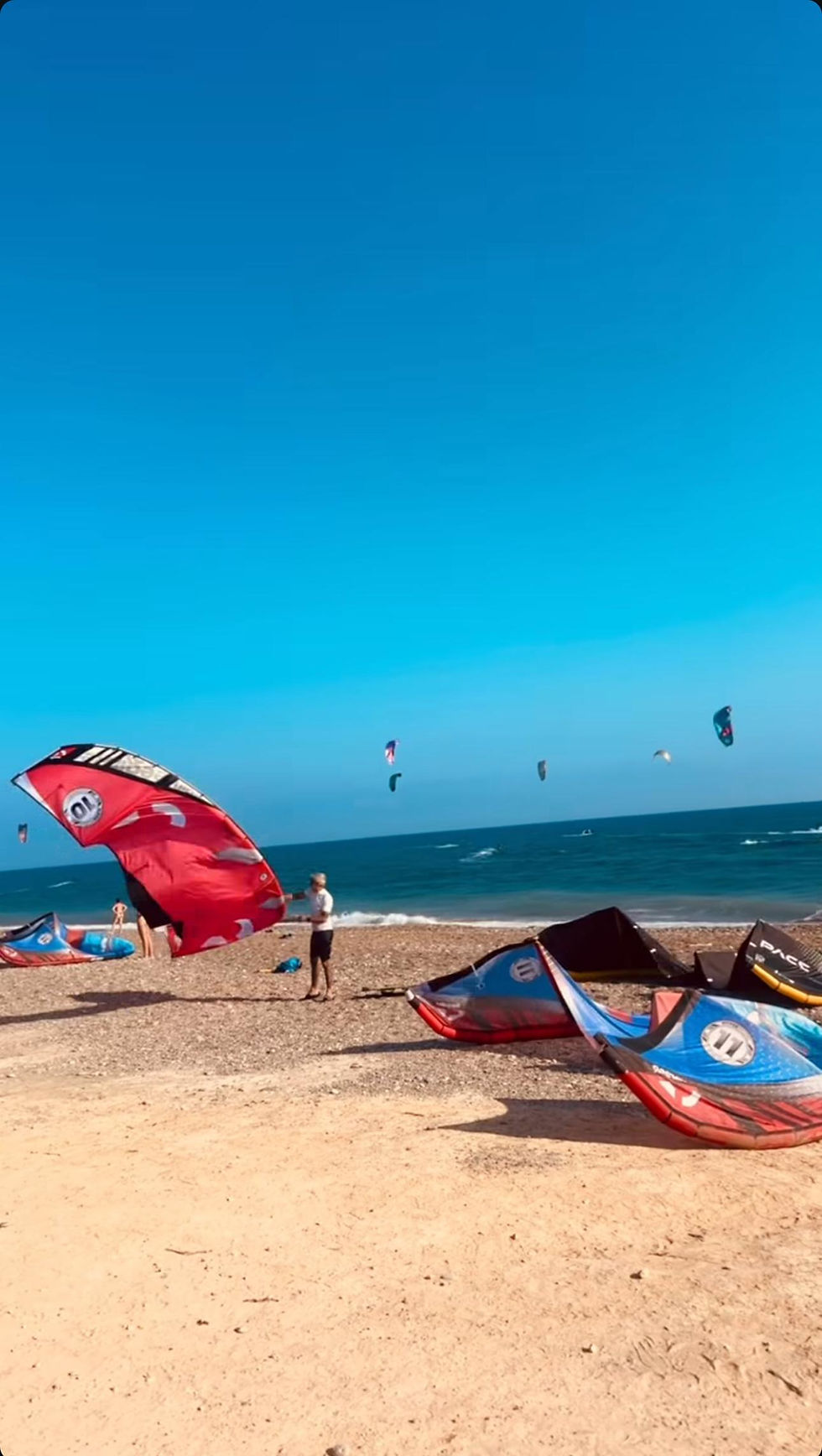
Most beginner lessons include the kite, control bar, lines, board and harness. A well-equipped school has different kite sizes because the correct choice depends on wind strength and student weight.
Equipment should be in suitable condition and the safety system should be demonstrated before use. Beginners should not be asked to provide their own gear unless this was clearly agreed and checked by the instructor.
Personal safety equipment
A helmet and flotation aid or impact vest should normally be provided for water training. Some schools also provide wetsuits, water shoes or sunglasses retainers, while others ask students to bring them.
Radio communication may be included for water coaching. This allows the instructor to give immediate directions without shouting from the beach, although radio use does not replace close supervision and rescue planning.
Safety briefing and spot assessment
Before launching, the instructor should explain boundaries, hazards, wind direction and emergency actions. A good lesson may be delayed, shortened or relocated if the conditions change.
This flexibility is part of the service, not an inconvenience. The school is responsible for making a professional judgement rather than following the booking clock regardless of weather.Rescue and support
The available rescue method depends on the location and lesson type. It may involve instructor assistance, a designated downwind area or boat support. Ask what happens if a student cannot return to shore or equipment fails.
Certification and progress records
Some schools can record your achieved level through a recognised training system. Others provide an internal progress note. A useful record lists specific competencies, not only the number of hours completed.
What may cost extra?
Transport, advanced boat sessions, photography, video analysis, certification fees or premium equipment may be separate. Damage caused by ignoring instructions may also be treated differently from normal training wear under the school’s terms.
Before booking a kitesurfing course in Cyprus, request a clear list of inclusions and exclusions. The right package should give you safe equipment, appropriate supervision, a realistic progression plan and a fair wind-rescheduling policy. These elements are more important than an offer that appears cheap but leaves essential details unclear.
Before you book
Contact the school with your available dates, experience, approximate weight and any relevant health or swimming information. Ask for the current meeting process, lesson inclusions and weather policy. Conditions can change quickly, so treat published guidance as general information and follow the instructor’s assessment on the day.



Comments